Writing From The Inside Out 2026 Week 4 Prompts
based on Keneth Rexroth’s, Empty Mirror
How It Works:
Read the poem
Do your own reflection on it, noting what it inspires in you
Feel free to use your own reflection as your prompt or…
Use the selection of prompts below
Pick one that inspires you and write (feel free to use only one or write several poems using different prompts) or…
Don’t use any of the provided prompts and follow your inspiration from wherever it comes
Empty Mirror
As long as we are lost
In the world of purpose
We are not free. I sit
In my ten foot square hut.
The birds sing, The bees hum.
The leaves sway. The water
Murmurs over the rocks.
The canyon shuts me in.
If I moved, Basho’s frog
Would slash in the pool.
All summer long the gold
Laurel leaves fell through space.
Today I was aware of a maple floating
On the pool. In the night
I stare into the fire.
Once I saw fire cities
Towns, places, wars,
Heroic adventures,
In the campfires of youth.
Now I see only fire.
My breathes moves quietly.
The stars move overhead.
In the clear darkness
Only a small red glow
Is left in the ashes.
On the table lies a cast
Snake skin and an uncut stone.
Kenneth Rexroth
https://www.poetryfoundation.org/poets/kenneth-rexroth
If you wish to attend the read around (t’s free, fun, a great way to share, and reading a poem is optional). Note: If you registered already, you do not need to register again, simply use the link sent to you in your confirmation email. Register Here:
The next Read-Around is 1/22/25 at 5:00 PM PST
My Thoughts
Mirrors are magical things. They allow us to see the world reflected; they allow us to see around corners and into hidden places. They allow us to see ourselves as we appear from the outside. Mirrors also serves as a metaphor for the limits of our perception because we see the world through our own lens. And the more we are invested in our goals and our perspectives, the more the world is a mirror of ourselves. The ancient wisdom of the Talmud, as quoted by Anias Nin, says: We do not see the world as it is, we see the world as we are.
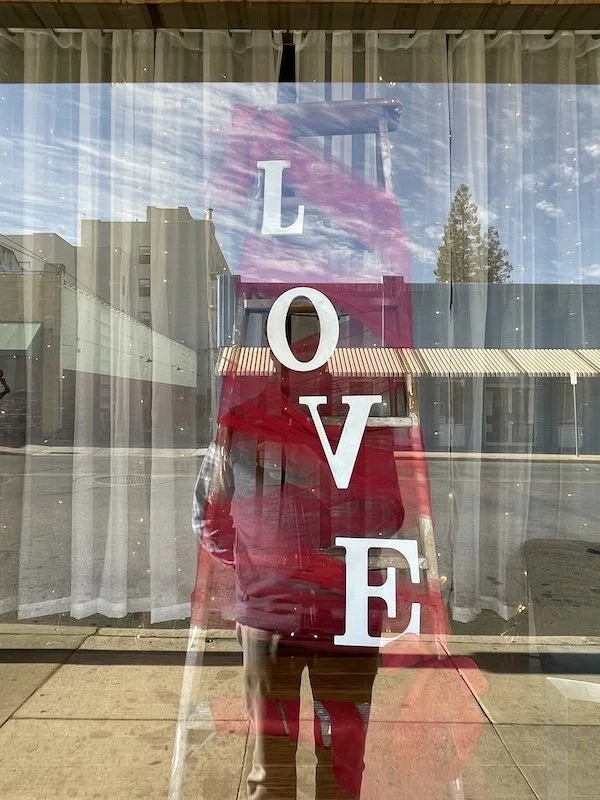
In Kenneth Rexroth’s poem, Empty Mirror, the poet says, As long as we are lost in the world of purpose, we are not free. He then describes what happens when we drop our need for the world to fit into our frames and filters and expect it to be something other than what it is. If we empty the mirror, we can experience the world directly. Everything becomes clear and simple. We get beyond our wild ambitions and frightful illusions and settle into what is all around us. Rexroth’s poem illustrates this beautifully with clear, simple declarative statements about what he sees, hears, feels, and notices in the world around him. When we see the world as it is, it tends to create a sense of serenity. Why not give yourself permission, for a few moments every day, to just notice what is around you, without scrutiny, taking in the world and letting it be what it is.
Prompt Ideas
Journal or write a poem titled, Empty Mirror. What does that bring to mind for you. (a portal to another world? Vampires?
When have you gotten lost in the world of purpose? In what way might that impact (limit or enhance) your freedom? Journal or write a poem about the joys and limits of immersion in a purpose.
Follow Rexroth’s example and write a series of simple declarative statements about what you see, hear, feel, smell, and taste in the world around at a particular time.
Basho was a Japanese poet in the Edo period (17th Century Japan) widely considered the greatest master of the Haiku and his frog poem is considered a classic. Write a few Haiku based on simple, direct observation of the world around you.
Rexroth contrasts what he now sees when staring into a fire versus what he in the campfires of his youth (presumable when he was lost in the world of purpose). In what way has aging helped you to experience the world more directly?
Rexroth ends the poem noticing a cast off snake skin, an apt metaphor for shedding an old skin or set of limitations to allow new growth. Write a poem about a time of shedding in your life or what you might be shedding now? Journal or write about how shedding served (or serves) your growth or brings you closer to life?
Write about anything else in the poem or in life that inspires you.